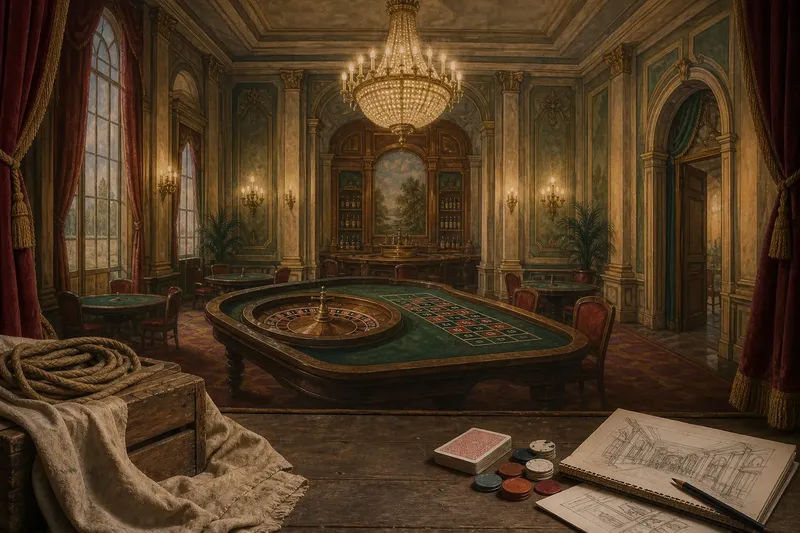
Casino Bến Nghé Table Customs for Joining a Shared Table
Casino Bến Nghé table customs help you read invitations, respect game boundaries and join a shared table without disrupting its social rhythm.

The common mistake with Casino Bến Nghé table customs is treating an empty chair as permission to join. At a gaming table, that can interrupt a hand, confuse who is waiting or bring personal belongings into a space reserved for play. The useful distinction is between social welcome and permission to take part in a game.
Casino Bến Nghé can be considered here as a cultural setting for observing how people share attention, space and chance—not as a claim that every visitor or table follows one fixed ritual. Separate what you can see from what you are guessing: a nod may welcome you to watch, while the game’s rules and staff determine whether you may join the play. Like a boarding queue, a table has a social order that is easier to respect when you first work out who is waiting and what space is in use.
Read the table as both a social space and a game
Before approaching, notice whether people are talking casually, following a game or waiting for a turn. Look for the dealer or staff member, the active players, and any marked playing area. Keep bags, drinks and loose items away from the table unless staff indicate where they belong.
Do not infer game permission from a friendly greeting. A person may be happy to talk while a round is under way, yet unable to invite a new player into it. If you want to watch, ask whether that is welcome and stand where you will not obstruct anyone’s view or movement.
Ask the right person before joining play
For a seat in a conversation, ask the people using the space. For a place in an active game, ask the dealer or venue staff about the joining procedure, current rules and any house restrictions. A clear answer from the person responsible for the game matters more than interpreting a gesture from across the table.
Use a short question, then wait for an answer. If the response is uncertain, the round is in progress or staff ask you to wait, step back and let play continue. Do not put money, cards or other objects into play until you understand the rules and are explicitly permitted to do so.
Keep turns, objects and conversation in their proper places
During play, follow the game’s stated turn order rather than relying on a general social cue. Avoid reaching across another player, touching cards or chips that are not yours, or moving items whose purpose you do not know. If you are unsure whether an action is allowed, pause and ask the dealer before acting.
Conversation should not compete with instructions or a player’s decision. Keep your voice at the level used by the group, and wait until a suitable pause to ask a non-urgent question. If you are only observing, do not advise players or comment on their choices unless invited.
Use these checks before taking a seat
- Check whether the game is active; if a round is under way, wait until it ends, otherwise ask staff whether joining is permitted.
- Check whether the chair is part of the playing area; if it is reserved or unclear, do not sit, otherwise ask the person responsible for the table before taking it.
- Check whether staff have explained the game’s rules; if not, request an explanation before play, otherwise follow the instructions given.
- Check whether your bag or drink would occupy shared space; if it would, keep it with you or use a place approved by staff, otherwise keep the table clear.
- Check whether you are being invited to watch or to play; if the invitation is ambiguous, ask the dealer or staff, otherwise follow the scope of the invitation.
- Check whether you understand the current turn and permitted actions; if you do not, wait and ask before acting, otherwise take only the action allowed by the rules.
How should you handle common table uncertainties?
Can a friendly nod mean you may join the game?
Not necessarily: it may be a social greeting or an invitation to watch. Ask the dealer or staff whether you may take part and wait for a clear answer.
What should you do if the rules are unclear?
Pause before placing anything or making a move, then ask the dealer to explain the relevant rule. If you still do not understand, sit out rather than guessing.
Where should you stand while watching?
Ask staff where observers may stand, then keep clear of the players, dealer and any marked playing area. If nobody can confirm a suitable spot, move away from the table.
How should you respond if staff ask you to wait?
Step back and let the current activity continue without pressing for an exception. Ask again only when staff indicate that the table is available.
Work through an arrival without guessing
Say you arrive at a table where a round is in progress, one chair looks empty and the group is speaking quietly. You keep your bag with you, stand outside the playing area and wait until the round ends. Then you ask the dealer whether the chair is available and whether new players may join; the dealer says the seat is reserved for someone who stepped away. You thank them, do not sit or touch anything, and ask where you may watch instead. If staff point to an approved viewing place, you stand there; if they do not, you leave the table clear. The result is an observable decision at each point: the chair stays available to its intended user, and your permission to observe is kept separate from permission to play.
Casino Bến Nghé table customs are best approached as context-sensitive courtesy, not a script to perform. Check who controls the space, distinguish watching from playing, and let the venue’s staff and game rules settle questions that gestures alone cannot answer.